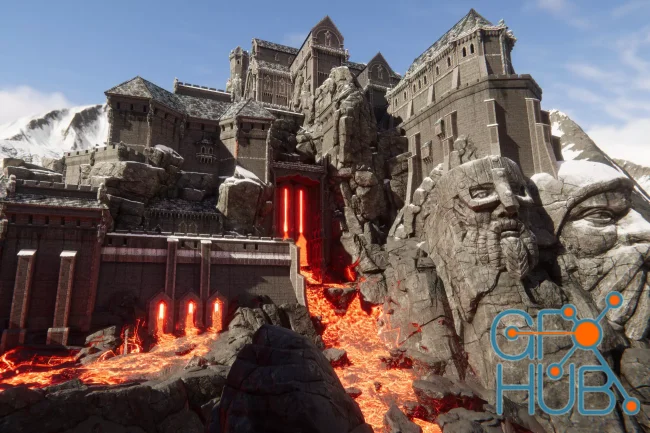
The world of digital media is evolving at lightning speed, and at the center of this evolution lies 3D graphics and game development. Whether it’s the immersive environments of next-gen games or the hyperrealistic effects in blockbuster films, 3D technology continues to redefine our digital experiences. Behind the stunning visuals and lifelike animation lies a complex fusion of art, design, and code — a synergy that demands both creativity and technical expertise. To support this creative journey, platforms like gfx-hub.co provide essential tools, assets, and software that help artists and developers bring their visions to life.
The Power of 3D Graphics in Modern Media
3D graphics are no longer limited to entertainment. They have found utility in architecture, education, product design, medical visualization, and augmented reality (AR).
The realism in today’s digital renderings is made possible through powerful rendering engines like V-Ray, Octane, and Arnold. These engines simulate light behavior in real-time and offer physically accurate rendering, shadows, and textures. Combined with GPU acceleration and AI-powered tools, even indie creators can now match the visual quality once reserved for AAA studios.
Game Development: An Industry Fueled by Innovation
Gaming has grown from niche entertainment into a multibillion-dollar industry, rivaling film and television in both revenue and cultural impact. At the heart of game creation is the game engine — tools like Unreal Engine, Unity, and CryEngine allow developers to build interactive worlds, simulate physics, animate characters, and deploy cross-platform games.
Platforms like it support developers by providing essential resources such as:
- 3D character models and environments
- Game-ready assets and props
- Animation rigs
- Sound libraries
- Plug-ins and extensions
This ecosystem speeds up development and empowers small teams to compete on a global scale.
Software That Powers the Magic
Several key software platforms have become industry standards in 3D modeling and animation. These include:
- Autodesk Maya – Preferred in film and AAA game development for animation and modeling.
- Blender – Open-source and incredibly powerful; supports modeling, sculpting, VFX, and game design.
- ZBrush – The go-to for sculpting detailed character models.
- Cinema 4D – Popular in motion graphics and broadcasting.
- 3ds Max – Often used for architectural visualization and product design.
It provides downloadable versions, tutorials, and add-ons for all these tools, giving beginners and professionals alike a head start.
The Role of Texturing and Materials
Even the best models fall flat without textures. The process of applying materials and texturing in 3D is as much an art as it is a science. Tools like Substance Painter and Quixel Mixer help artists paint realistic surfaces, create procedural materials, and simulate wear and tear.
A library like that offered by it provides high-resolution textures, PBR materials, and smart shaders that elevate your renders from good to exceptional.
Animation and Rigging: Breathing Life into Models
Rigging is the skeleton system that allows 3D characters to move. Once rigged, these models can be animated using keyframes, motion capture, or procedural logic.
For aspiring animators, It offers:
- Pre-rigged characters
- Facial animation assets
- Motion capture data
- Animation templates for games and films
These ready-to-use elements save hours of manual work and enable faster iteration in storytelling.
The Revolution of Real-Time Rendering
Thanks to advances in GPU hardware and software optimization, real-time rendering is becoming more common, particularly in gaming and virtual production. Tools like Unreal Engine 5 allow creators to visualize photorealistic environments in real-time, complete with dynamic lighting and global illumination.
This trend is changing workflows across industries. For example:
- In architecture, clients can walk through buildings in VR before construction begins.
- In filmmaking, directors can preview visual effects in-camera using LED volumes and game engines.
- In education, students can explore interactive simulations instead of static diagrams.
Filmmaking and VFX: The 3D Connection
Modern filmmaking relies heavily on CGI and visual effects, and this is where the worlds of 3D and cinema collide. Green screen replacements, digital doubles, explosions, and complex simulations are now common elements in cinematic storytelling.
Filmmakers and VFX artists use tools like:
- Nuke and After Effects for compositing
- Houdini for simulations and procedural generation
- DaVinci Resolve for color grading
The Role of AI in 3D and Game Design
AI is quickly becoming a transformative force in 3D content creation. From generating textures to automating rigging and even creating entire environments procedurally, AI tools are speeding up workflows.
Applications of AI include:
- Automatic UV unwrapping
- AI-generated textures and materials
- Predictive animation and motion smoothing
- Procedural content generation for open-world games
Creative platforms like gfx-hub.co are beginning to incorporate AI-powered assets, opening new doors for non-coders and solo artists.
Learning and Growing in the Industry
Getting started in 3D graphics and game development can be intimidating. Fortunately, there is an abundance of learning resources. The platform hosts:
- Beginner to advanced tutorials
- Masterclasses by industry professionals
- Project files for hands-on learning
- Software training guides
This accessibility helps democratize digital creation, allowing anyone with passion and a computer to begin their journey.
Challenges in 3D Production
Despite the abundance of tools, there are challenges:
- Steep learning curves of software tools
- Hardware requirements for high-end rendering
- Keeping up with rapidly changing technologies
- Time-consuming processes like baking, rigging, and simulation
Career Opportunities and Industry Outlook
With the rise of the metaverse, AR/VR experiences, and digital twins, demand for 3D professionals is exploding. Career paths include:
- 3D modeler or animator
- Game developer or designer
- VFX artist
- Motion graphics designer
- Technical artist
The Community and Collaboration
One of the most empowering aspects of working in this field is the sense of community. Online forums, Discord servers, YouTube channels, and asset-sharing platforms bring creators together.
It fosters a similar sense of collaboration by curating high-quality content shared by users and professionals alike. The community-driven approach ensures that the library is constantly updated, relevant, and in tune with industry needs.
The Future: Virtual Worlds and Beyond
Looking ahead, technologies like Web3, mixed reality, AI-generated avatars, and blockchain-based asset ownership (NFTs) will continue to influence how 3D content is created and shared.
Imagine a world where:
- Your 3D avatar moves seamlessly between games, VR worlds, and social platforms.
- Game levels are generated based on your emotional responses in real time.
- Filmmakers can direct actors inside digital sets using just voice commands.
Final Thoughts
Whether you’re a beginner looking to explore digital creativity or a professional pushing the boundaries of interactive storytelling, the tools and assets you use matter. It stands out as a valuable ally in this journey, offering a massive range of resources that empower creators of all skill levels.
In the evolving world of 3D graphics, game development, video editing, and filmmaking — your imagination is the limit, and your tools are your wings. Equip yourself well, collaborate with the community, and never stop learning.